Questions to ask your parent's doctor (and how to prepare for the visit)
Appointments are short, and it is easy to leave without the answers you came for. A little preparation turns a rushed visit into a useful one. Here is how to get ready, which questions to ask, and what to do afterward.
Before the appointment
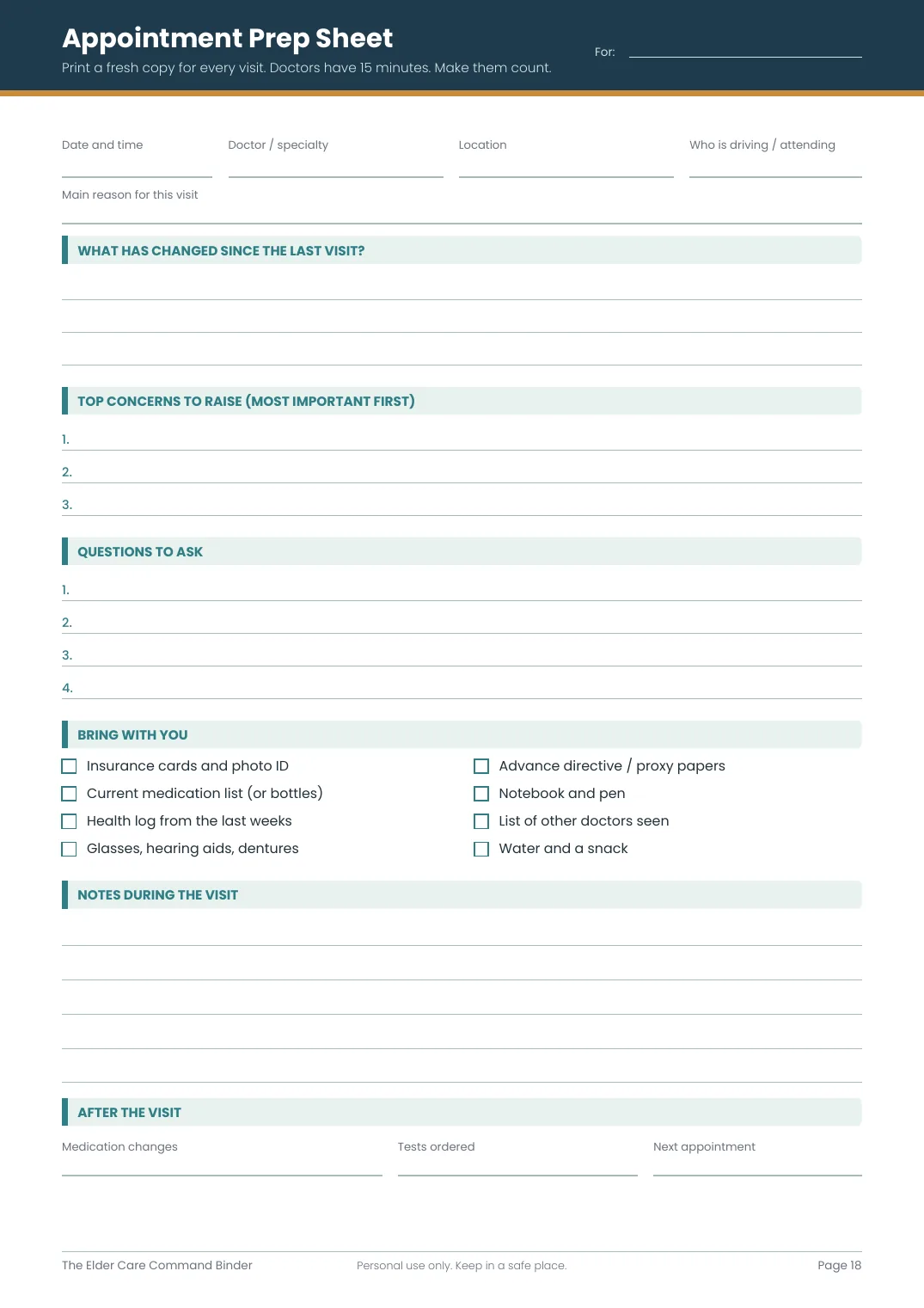
- Write down your top three concerns, most important first. Time runs out, so lead with what matters most
- Bring the current medication list, or all the bottles. See how to make a medication list
- Note what has changed since the last visit: sleep, appetite, mood, falls, confusion, pain
- Bring insurance cards and photo ID, plus recent test results or hospital papers
- List the other doctors involved, so this one sees the whole picture
- Check about permission. Some offices need a signed release before they can discuss your parent's care with you. In the US this is commonly a HIPAA authorization, and the front desk can tell you what they need
- Decide who is going and who takes notes. It is hard to listen and write at the same time
During the visit
- Start with the main concern in one sentence, then give specifics: when it began, how often it happens, and what makes it better or worse.
- Say what your parent may downplay. People often tell the doctor they are fine. With your parent's agreement, mention falls, missed medicines or changes you have noticed.
- Ask one question at a time and write down the answer.
- Repeat back what you heard, for example "So the plan is to start this medicine and recheck in a month?" Misunderstandings show up quickly this way.
- Do not leave without knowing the next step, including who will call and when.
Questions to ask
About a new diagnosis
- What is the diagnosis, in plain words?
- Is it expected to change over time?
- What are the treatment options, and the pros and cons of each?
- What happens if we wait or do nothing?
- What should we watch for at home, and what means we should call you or go to the emergency room?
About a new or changed medication
- What is it for, and how long will it be taken?
- How and when should it be taken?
- What side effects are common, and which are serious?
- Does it interact with anything else they take, including supplements?
- What should we do if a dose is missed?
About tests and referrals
- What is the test looking for, and how should we prepare?
- When will results be ready, and who will contact us?
- Why are we being referred to a specialist, and what should we expect there?
About safety and daily life
- Is it still safe to live alone, drive or manage stairs?
- Do we need to change diet, activity or the setup of the home?
- Would physical or occupational therapy help?
About next steps
- When is the next visit, and what should we track until then?
- Who do we call with questions, and how soon can we expect a reply?
- Can we have a written summary or access to the patient portal?
If your parent has memory problems or resists help
Some doctors prefer to hear concerns privately so your parent is not embarrassed. You can call or send a short note ahead of time, or ask whether the doctor can speak with you separately for a few minutes. In the visit itself, speak with your parent, not over them, and let them answer first when they can.
After the visit
- Write down what was said right away, while it is fresh
- Update the medication list and your appointment log
- Book follow-up visits and tests before leaving the office if you can
- Share a short summary with siblings and anyone else on the care team
- Set a reminder to chase any test results that have not arrived
Common questions
Should I go to my parent's appointments?
If your parent wants you there and gives permission, a second person to listen and take notes is often valuable. Ask them first, and respect their wishes if they would rather go alone.
What if the doctor seems rushed?
Lead with your most important concern, keep questions short, and ask for a written summary. If there is more than one issue, ask to book a follow-up visit rather than trying to cover everything at once.
Can I ask for a longer appointment?
Yes. When booking, say you have several issues to discuss and ask whether a longer slot is available. Some offices offer extended visits for older patients with complex needs.
What if I live far away?
Ask whether you can join by phone or video, and send a short written list of concerns to the office beforehand. A local sibling, friend or aide can take notes and share them with you the same day.
This guide is an organizational resource. It is not medical, legal, financial or insurance advice and does not replace professional guidance. Laws and benefits vary by location.