Hospital discharge checklist for family caregivers
Going home from the hospital is one of the most delicate moments in an older person's care. Instructions come quickly, medicines change, and the people who explained everything are no longer in the room. This checklist helps you ask the right questions before you leave and set up the first week at home.
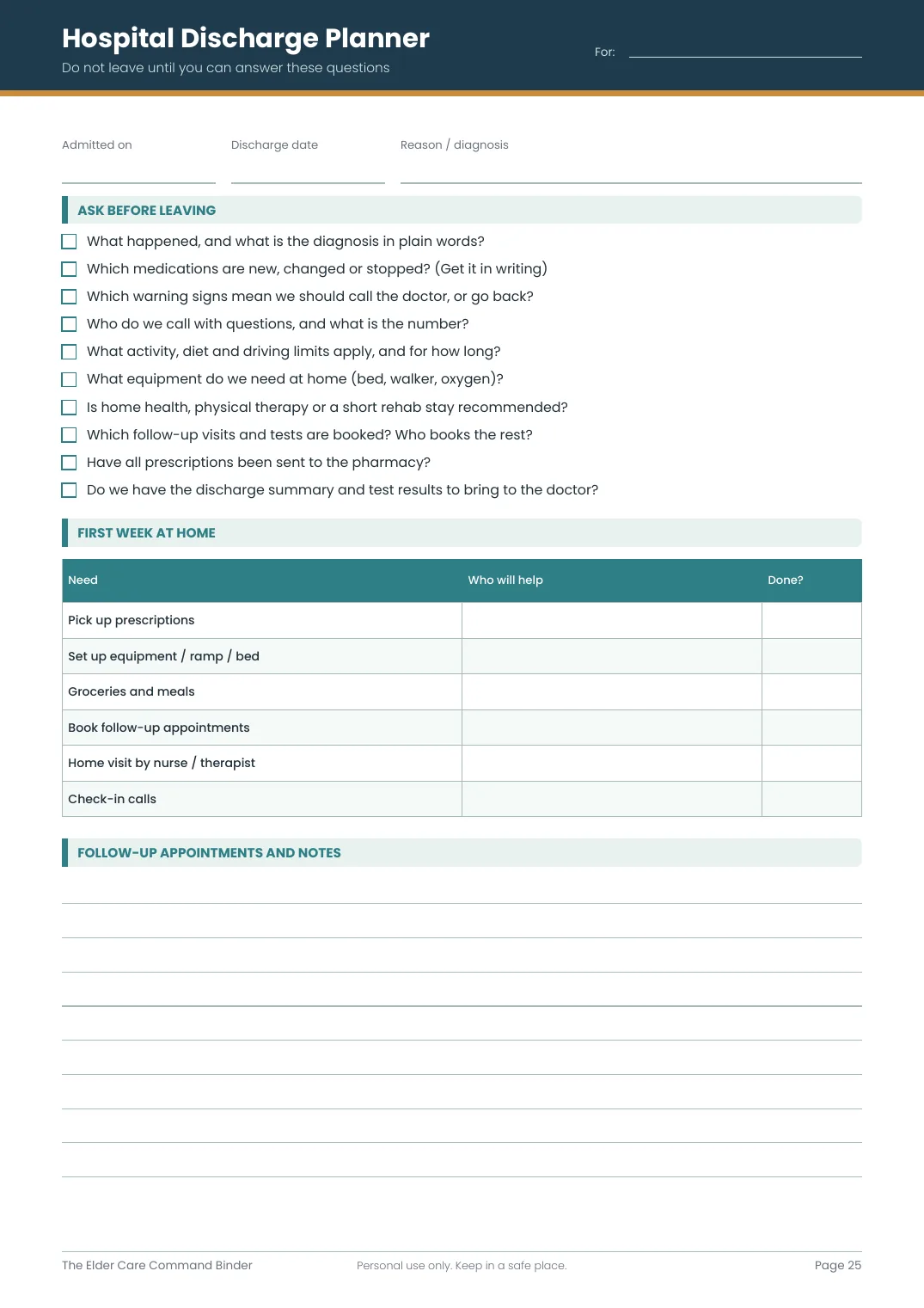
Start planning on day one
- Ask the nurse or case manager when discharge is expected and who is making the plan
- Ask what level of help your parent is likely to need at home
- Tell the team how your parent normally thinks and moves, so they can tell what is new. Mention dementia or any history of confusion in hospital
- Give staff your phone number and say who else should be called
Questions to ask before you leave
- Why was my parent admitted, and what is the diagnosis now?
- Which medicines are new, changed or stopped?
- What should activity, diet, bathing and stairs look like for now?
- What warning signs mean we should call the doctor, call a nurse line, or call emergency services?
- Which follow-up appointments are needed, with whom, and by when?
- Are any test results still pending, and who will tell us?
- Does my parent need home health care, therapy or equipment?
- Who can we call with questions after hours?
- Can we have the instructions in writing, in plain language?
Check the medication changes carefully
- Compare the discharge list to the list you already have, line by line.
- Sort each medicine into new, changed, stopped or unchanged.
- Remove old bottles for anything that was stopped or replaced, so they are not used by mistake.
- Confirm the new prescriptions are filled before going home, or arrange a pickup that day.
- Update your medication list straight away. See how to make a medication list.
Hospital lists sometimes differ from what is at home. If anything looks wrong or confusing, ask the nurse or pharmacist before you leave, not after.
Get the home ready
- A clear, well-lit path from the door to the bed and the bathroom
- Loose rugs and clutter removed, and night lights in place
- Any equipment the team recommends, such as a walker, shower chair, raised toilet seat or hospital bed
- Food in the house that fits any diet instructions
- A way for your parent to call for help
- Someone staying for the first night or two
Paperwork to take with you
- The discharge summary and written instructions
- The updated medication list
- Follow-up appointment details and referral information
- Phone numbers for questions, including after hours
- Test results, or how to get them
- Orders for home health, therapy or equipment
Plan the first week
- Day one: confirm the medicines are filled and write out the daily schedule.
- Share the load: decide who covers which hours, and who is the backup.
- Book the follow-ups and arrange transport to each one.
- Write down what you see each day: appetite, mood, pain, sleep, confusion and any falls.
- Review the warning signs with everyone helping.
- Call the doctor early with new concerns rather than waiting to see if they pass.
If you think discharge is happening too soon
You can raise concerns. Ask to speak with the case manager, social worker or patient advocate. In the US, people with Medicare who believe they are being discharged too soon can ask for a review, and the hospital must give a written notice explaining how. Rules differ by country and by insurer, so ask the hospital what applies to your parent.
Common questions
What if I do not feel ready to take my parent home?
Say so, and say why. Ask the case manager what support is available at home, such as home health visits or therapy, and whether a short stay in a rehabilitation facility could be an option. The team can only help with problems it knows about.
Who arranges care at home after discharge?
The hospital's case manager or social worker usually makes referrals for services such as home health care and equipment. Ask who your contact person is and get their phone number before you leave.
What is a discharge summary?
It is a document written by the hospital team that explains why your parent was admitted, what was done, which medicines changed, and what follow-up is needed. Ask for a copy and bring it to the next doctor's visit.
When should the follow-up appointment be?
It depends on the condition and the treatment, so ask the team for a specific timeframe and make sure the appointment is booked before you leave, or that someone will call you.
This guide is an organizational resource. It is not medical, legal, financial or insurance advice and does not replace professional guidance. Laws and benefits vary by location.