Emergency information sheet for an elderly parent: what to include
When paramedics arrive, or your parent is wheeled into an emergency room, the people helping need facts fast: what conditions they have, what medications they take, what they are allergic to, and who to call. In a crisis, no one remembers all of that, and your parent may not be able to say it. A single emergency information sheet solves this.
This guide covers what belongs on the sheet, what to leave off, and where to keep it so it can actually be found.
Why one page works best
Responders are working quickly. A thick folder of papers will not be read; a single clear page might save minutes. Put the most important information on one side of one sheet, in plain handwriting or print, with large headings. Everything else can live in a binder for later.
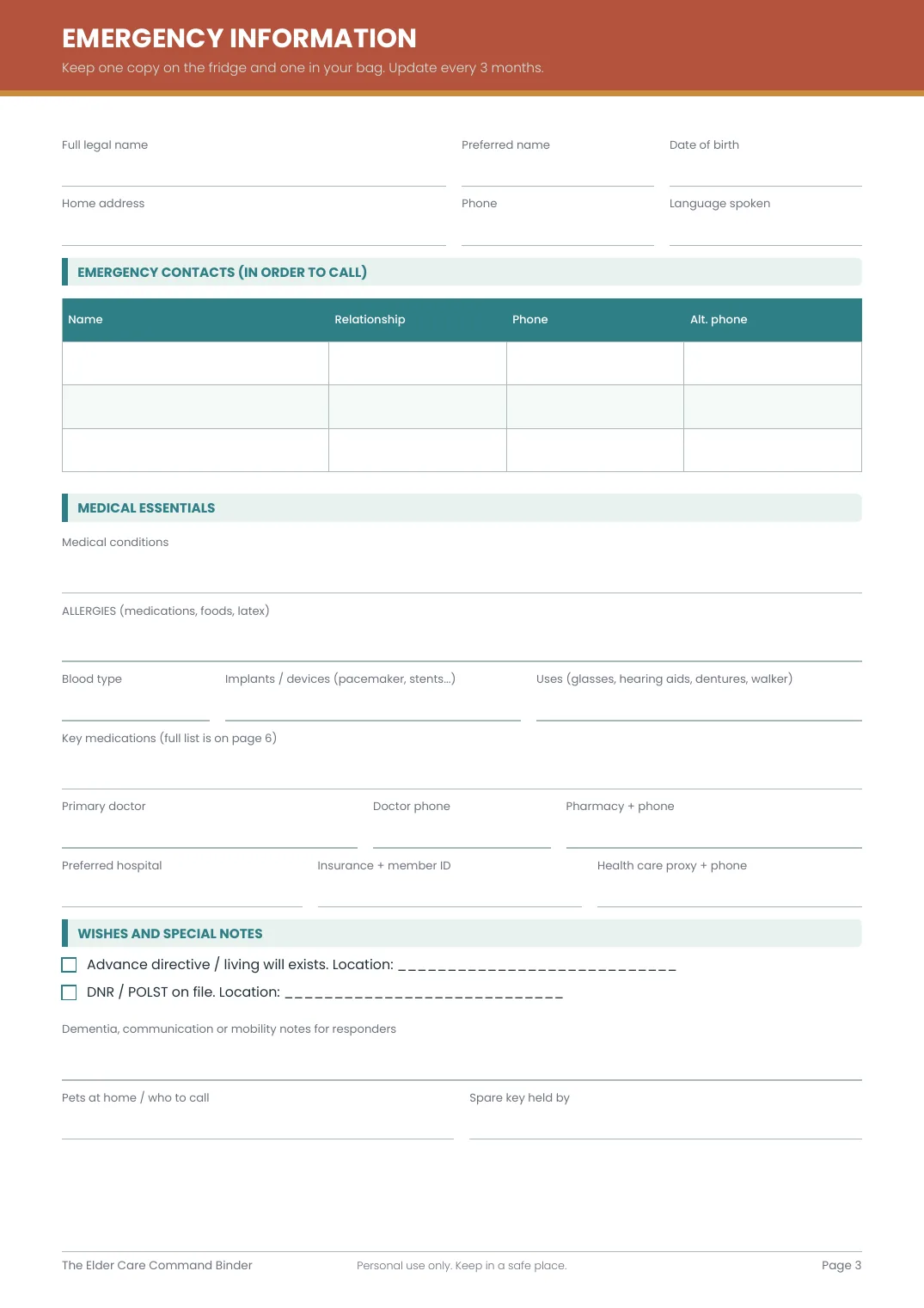
What to include
Identity and basics
- Full name, preferred name, date of birth
- Home address and primary language
- A recent photo, if you like, to help identify them
Medical conditions
- Major diagnoses (heart disease, diabetes, COPD, Parkinson's, dementia, and so on)
- Recent surgeries or hospital stays
- Implants or devices such as a pacemaker, stent, joint replacement or insulin pump
Allergies and bad reactions
- Medication allergies, with the reaction if you know it
- Food, latex or other allergies
- Any medicine they should never be given
Current medications
- Name, dose, how often, and what each is for
- Over-the-counter medicines, vitamins and supplements
- Blood thinners and insulin, clearly marked, since these matter most in an emergency
Doctors and pharmacy
- Primary care doctor and any specialists, with phone numbers
- Preferred pharmacy and its phone number
- Preferred hospital, if they have one
Emergency contacts
- At least two people, with relationship and phone numbers
- Who is the healthcare proxy or decision-maker, if one has been named
- A backup contact in a different household
Insurance
- Insurance plan name and phone number
- Where the physical cards are kept
Wishes and where the paperwork is
- Whether an advance directive, living will or similar document exists
- Where the original and copies are kept
- Any do-not-resuscitate or similar order, if one exists
How they communicate and move
- Hearing aids, glasses, dentures or a walker
- Memory or communication difficulties, such as confusion, not recognizing people, or a tendency to wander
- Anything that calms or upsets them
If your parent has dementia: a short, factual note helps responders and hospital staff a great deal. Something like "May be confused or frightened. May not answer questions reliably. Please speak slowly and call me." is far better than leaving staff to guess.
What to leave off
The sheet may sit on a fridge or be handed to strangers, so keep sensitive details off it.
- Social Security or other government ID numbers
- Full bank, credit card or insurance account numbers (the last four digits and where the full details are kept is enough)
- Passwords or PINs
Where to keep it
A perfect sheet in a drawer helps no one. Make several copies and place them where they will be seen:
- On the fridge. Responders know to look there, and it is easy for family and aides to find.
- In your bag or car. You are often the one who goes with your parent to the hospital.
- In their wallet or purse, in case they are alone.
- On your phone. A photo of the sheet works if you cannot reach the paper copy.
- With siblings and one nearby neighbor, so more than one person has it.
How to fill it out in 30 minutes
- Gather the sources. Medication bottles, insurance cards, a recent discharge summary, and a list of doctors.
- Sit down with your parent if you can. They often know details you do not, and being involved helps them feel in control.
- Write it in pencil. Medications and contacts change, and pencil makes updates easy.
- Check the medication list with their doctor or pharmacist if you are unsure of a dose or name.
- Make copies and place them using the list above, then tell the family where they are.
- Set a reminder to review it every few months and after any hospital stay or medication change.
Common questions
Who should fill out the emergency information sheet?
Whoever knows the most, ideally together with your parent. Sit down with them, go through their medication bottles and paperwork, and confirm anything you are unsure of with their doctor or pharmacist.
How often should it be updated?
Review it every few months and after any hospital stay, new diagnosis, or medication change. An out-of-date sheet can be worse than none, so write in pencil and replace the copies when something changes.
Is an emergency information sheet a legal document?
No. It is a quick reference for responders and family. Legal wishes such as an advance directive or a do-not-resuscitate order need their own official forms, and the rules vary by location. The sheet can note where those documents are kept.
What if my parent has dementia?
Add a short note about memory and communication: whether they may not recognize you, may be confused or frightened, may not answer questions reliably, or may wander. This helps responders and hospital staff approach them calmly.
This guide is an organizational resource. It is not medical, legal, financial or insurance advice and does not replace professional guidance. Laws and benefits vary by location.