What to put in a caregiver binder: a complete checklist
When you start helping a parent with their care, information ends up everywhere: pill bottles on the counter, appointment cards in a purse, phone numbers in three different notebooks. A caregiver binder pulls it into one place that any family member, aide or neighbor can pick up and understand. Here is what belongs in it, section by section.
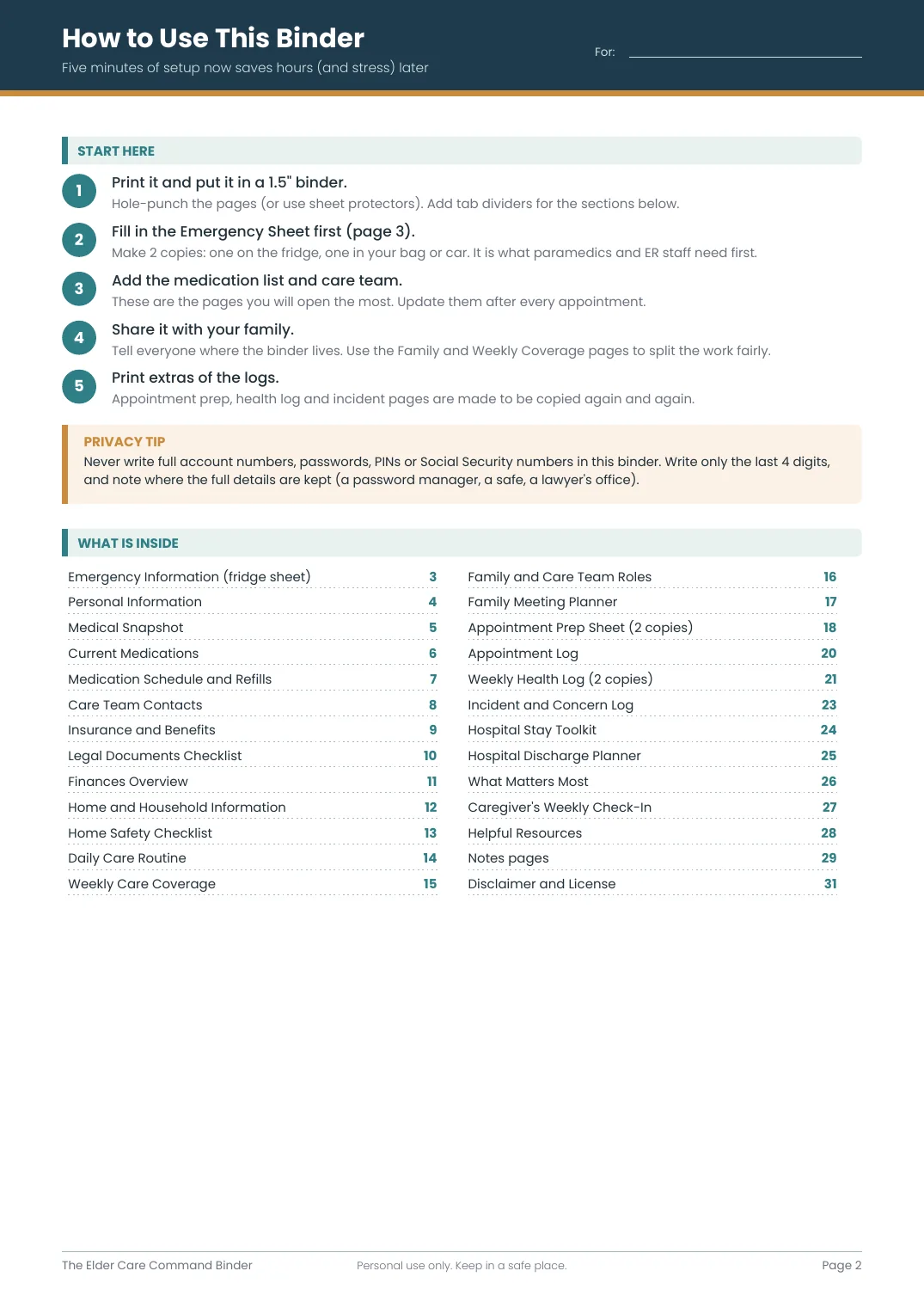
What a caregiver binder is
A caregiver binder is a paper organizer, kept at home, that holds the information needed to look after one person. It is not a medical record and it does not replace what the doctor keeps. It is the working copy that you and the people helping you actually use.
It works because it is printed. There is no password, no battery and no app to install, so siblings, aides and neighbors can find what they need in seconds, and you can grab it when an ambulance arrives.
The sections every binder needs
1. An emergency sheet
- One page with conditions, allergies, medications, contacts and wishes, kept where responders will look
- Copies on the fridge and in your bag. See our guide to the emergency information sheet
2. A personal and medical snapshot
- Name, date of birth, language and a few lines about the person, not just the patient
- Conditions, allergies, surgeries, vaccinations and preferred hospital
3. Medications
- Every prescription, over-the-counter medicine and supplement, with dose, purpose and prescriber
- A daily schedule and a refill tracker. See how to make a medication list
4. Care team contacts
- Doctors, specialists, pharmacy, dentist, eye doctor, home health and any aides
- Which number to call for what, and the office hours
5. Insurance and benefits
- Plan names and phone numbers, with only the last four digits of member numbers
- Where the physical cards are kept
6. Legal documents checklist
- Which documents exist, such as an advance directive, healthcare proxy, power of attorney and will
- Who holds copies and where the originals are. The rules vary by location, so ask a qualified professional about the forms themselves
7. Finances overview
- Accounts and monthly bills at a glance, with last four digits only
- Where the full records are kept
8. Home and household information
- Utilities and shut-offs, spare key, trusted neighbors, pets and house rules
- Anything a stand-in would need to know, even for one day
9. Daily routine and weekly coverage
- How a normal day goes, so any helper can keep it familiar
- A weekly grid showing who covers which part of the week, with a backup on call
10. Logs
- An appointment log, with what was decided at each visit
- A weekly health log for blood pressure, sleep, appetite, mood and pain
- An incident log for falls, confusion and ER visits, written down while fresh so patterns show
11. A hospital toolkit
- A packing list, admission questions and a place for daily updates from the care team
- A discharge planner. See our hospital discharge checklist
12. Wishes and your own check-in
- A conversation guide for talking about what matters most while things are calm
- A weekly page for you, with burnout signs to watch for and a respite plan
How to set it up in an afternoon
- Choose a binder and dividers. A 1.5-inch three-ring binder with tab dividers and a few sheet protectors holds everything.
- Start with the emergency sheet. It is the page that matters most if something happens tonight.
- Add medications and contacts next. These are the pages you will open most often.
- Write in pencil. Medications, appointments and phone numbers change, and pencil makes updates easy.
- Fill the rest over a few weeks. Do not wait until it is perfect. A half-filled binder in the right place beats a perfect one that never gets finished.
- Tell the family where it lives. Everyone who helps should know where to find it and what they can write in it.
What to keep out of it
A binder may sit on a shelf where visitors, aides and neighbors can see it, so leave out anything that could cause harm if it were copied or lost.
- Full Social Security or other government ID numbers
- Full bank, credit card or insurance account numbers
- Passwords, PINs and security answers
Instead, write the last four digits and a note on where the full details are kept. You get the useful part without the risk.
Keeping it current
An outdated binder is worse than none, because people trust it. A short routine keeps it reliable:
| When | What to update |
|---|---|
| After every appointment | Medications, appointment log, any new instructions |
| After a hospital stay | Medications, discharge planner, emergency sheet, incident log |
| Once a month | Contacts, refill dates, weekly coverage |
| Twice a year | Legal documents checklist, insurance, finances overview |
Paper binder or app?
Apps are good for reminders and for sharing updates with family who live far away. Paper wins when the power is out, when the person you hand it to is not comfortable with technology, and for responders who need one page fast. Many families use both: the paper binder as the main record, and a phone photo of the emergency sheet as a backup.
Common questions
How many pages does a caregiver binder need?
Enough to cover each section above with room to write. The ClearPage Elder Care Command Binder uses 31 pages, which includes second copies of the pages you fill in most often.
Who should keep the binder?
Keep it where the main caregiver and any helper can reach it, such as the kitchen or the parent's home. Give each close family member a copy of the emergency sheet, and make sure they know where the full binder lives.
Do I need a binder if I live far away from my parent?
It can help even more. A binder at your parent's home lets local helpers, neighbors and aides find what they need, and you can keep a photo of the key pages on your phone. Ask someone nearby to take on the weekly update.
What if my parent has dementia?
Include a short note on memory and communication in the emergency sheet and the daily routine, and record what calms or upsets them. This helps new helpers and hospital staff approach them calmly.
This guide is an organizational resource. It is not medical, legal, financial or insurance advice and does not replace professional guidance. Laws and benefits vary by location.