How to make a medication list for an elderly parent
A current medication list is the most useful single page you can hand to a doctor, pharmacist or paramedic. It is also the page most likely to be out of date. This guide covers what to write down, where to get the details, and a simple routine that keeps the list accurate.
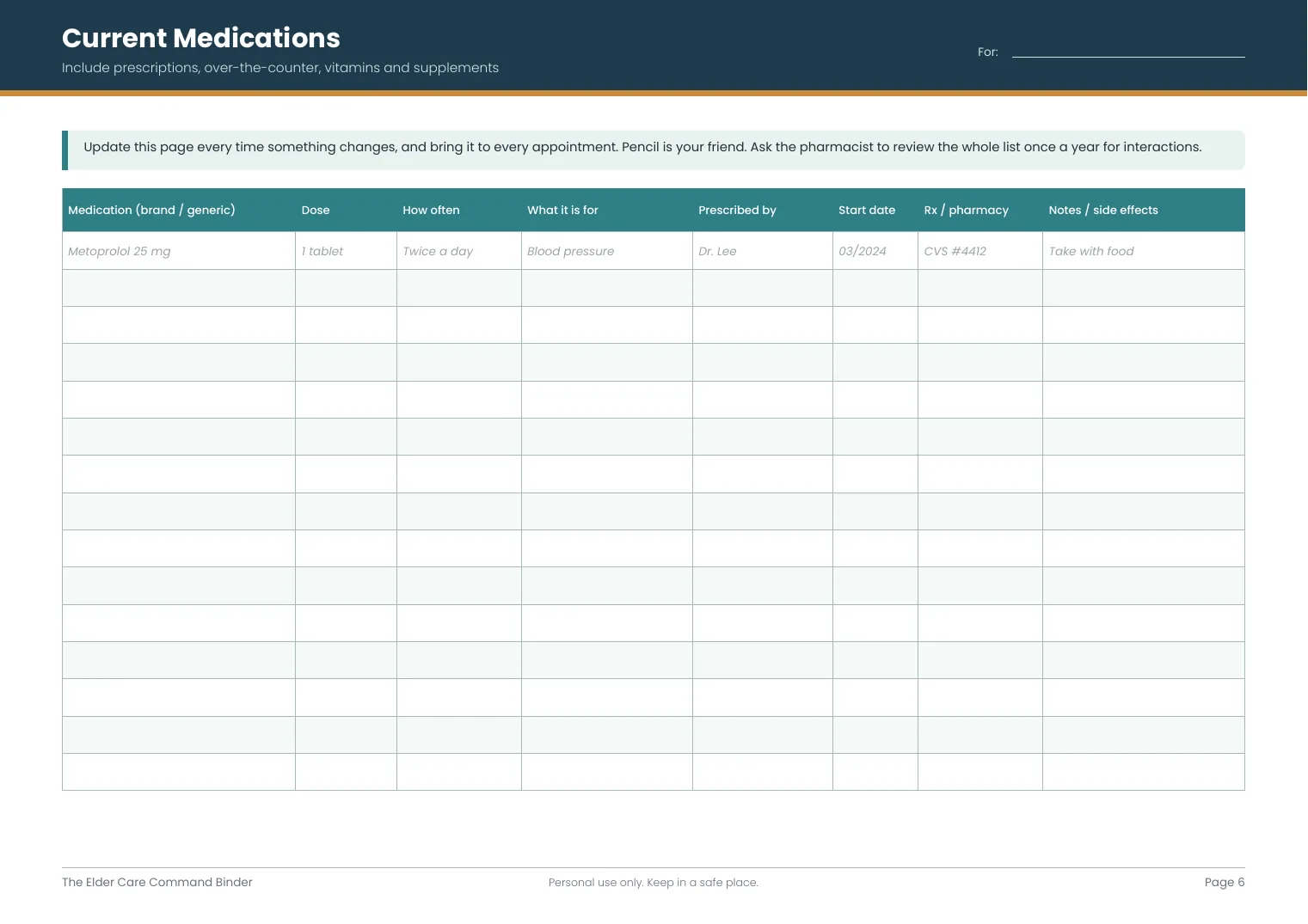
Why an accurate list matters
Older adults often see several doctors, and each one prescribes without always seeing what the others have added. A single, complete list lets any doctor, pharmacist or hospital team spot duplicates, possible interactions and gaps. It also saves precious minutes in an emergency, when no one can remember the name of a pill.
What to record for every medicine
- Name. Write the brand and generic names if both appear on the label
- Dose and form. For example, a 20 mg tablet, one drop in each eye, or a patch
- How often and when. The times of day, and whether it is taken with food
- What it is for. A few words are enough, such as "blood pressure"
- Who prescribed it. And which pharmacy fills it
- Start date. And the date it was changed or stopped
- Refill date. How many are left and when the supply runs out
- Special instructions. For example, not to be crushed, or taken on an empty stomach
- Side effects you have noticed. So you can mention them at the next visit
Include everything they take, not just prescriptions
- Over-the-counter medicines such as pain relievers, antacids, sleep aids and allergy pills
- Vitamins, minerals and herbal supplements
- Creams, patches, eye drops, inhalers and injections
- "As needed" medicines, with a note on when they are actually used
Doctors and pharmacists need the full picture because some over-the-counter products and supplements can interact with prescriptions. If you are unsure whether something matters, include it and ask the pharmacist.
Where to find the details
- The bottles and boxes. The label has the name, dose, instructions, prescriber and pharmacy
- The pharmacy. Ask for a printed list of everything they have filled for your parent
- Discharge papers. After a hospital stay, these show what was added, changed or stopped
- The doctor's patient portal. It often lists current medications
Once you have a draft, consider a "brown bag" review: put every bottle, box and supplement in a bag, bring it to the pharmacist or doctor, and ask them to go through it with you. It is a common way to catch duplicates, expired items and medicines no one is taking any more.
Turn the list into a daily schedule
A list says what is taken. A schedule says when. Group the medicines by time of day, such as morning, midday, evening and bedtime, so anyone helping knows what is due. If your parent uses a weekly pill organizer, agree on one person who fills it, so doses are not doubled or missed.
Track refills so nothing runs out
- Write the date each supply will run out, not just the date it was filled
- Reorder a few days to a week early, especially for mail-order prescriptions
- Ask the pharmacy whether refills can be synchronized to one pickup date
- Keep a note of which medicines are most important not to miss, and ask the doctor if you are unsure
Keep it current
- Update the list the day anything changes, not at the end of the week
- Cross out stopped medicines with the date and reason instead of erasing them, so no one restarts one by mistake
- Write in pencil so entries are easy to change
- Bring the list to every appointment and keep a copy in your parent's wallet
- Keep a photo on your phone, and replace the copy on the emergency sheet each time
A list is not a prescription. Never change a dose or stop a medicine because of what a list shows. Questions about whether something is right go to the prescriber or pharmacist.
Questions to ask the pharmacist
- What is each medicine for, and how long will it be taken?
- Are there any that should not be taken together, or with over-the-counter products?
- Which ones are most important not to miss?
- Can any be timed together or simplified to make the day easier?
- What side effects should we watch for, and who do we call about them?
- Is there a lower-cost generic option?
Common questions
How often should the medication list be updated?
Update it the same day anything changes, and review the whole list at least every few months and after every hospital stay. An out-of-date list can be worse than none, because people trust it.
What if my parent does not take a medicine the way it was prescribed?
Write down what they actually take and tell the doctor, so the plan can be adjusted. Doctors can only help if they know what is really happening, and there is often a simpler option.
Should I list medicines that were stopped?
Yes, in a short separate section with the stop date and the reason. It prevents an old bottle from being restarted by mistake.
Is a phone app enough?
An app can be handy for reminders, but paper is easier to hand to a paramedic, aide or neighbor. Many families keep a paper list as the main record and a photo of it on their phone.
This guide is an organizational resource. It is not medical, legal, financial or insurance advice and does not replace professional guidance. Laws and benefits vary by location.